Victorian Mother of 3 Mortgage Fraud, Hidden VINs and a Delayed Search for Justice after ex arranged loan from hell, 2002.
The story did not begin with a dramatic chase or a smoking gun. It began with a house file, a loan that did not smell right, and a woman trying to keep a roof over her children’s heads.
I come at this like a boilermaker welder from the oil and gas fields, not like a polished investigator in a suit. I understand pressure, heat, cracks, and what happens when a weak joint gets painted over instead of repaired. That is how this case felt from the start. Something had been dressed up to look solid, but the weld line underneath was wrong.
The documents connected to the Debra Kent house sale became the seed of a bigger story, one that later shaped a book and the idea for a TV adaptation. It had the pieces screenwriters chase: mortgage documents, alleged false income claims, caveats, two Corvettes, disputed signatures, an uneasy property sale, and teenagers allegedly warned to tell their mother to back off.
This post is not a court finding. It is an account of an investigation as it was understood through documents, meetings, recollections, and questions that still need proper answers. It is also not legal or financial advice. It is a record of why the search for justice has been delayed, not abandoned.

The house file raised the first hard questions
When I first met Debra, the issue was not a theory. It was practical and urgent. Her ex-husband had allegedly organised a loan so she could take over the house. On paper, the arrangement appeared to rely on a guarantee that she earned $1,800 a week.
That figure mattered. In a mortgage file, income is not decoration. It can decide whether a loan is approved, whether a borrower is exposed, and whether the whole arrangement rests on truth or fiction.
The accounting firm named in the file, JMA, was said to be involved in arranging a letter of guarantee. The central question was plain:
Did the letter reflect Debra’s real income, or was it used to push a loan through?
That is where mortgage fraud often starts. Not with a masked villain, but with a piece of paper that makes a borrower look safer than they are. A lender sees income. A finance company sees capacity. A family sees a chance to keep the house. Later, when the numbers fail, the borrower can be left carrying the damage.
The file did not feel like a simple mistake. It felt built.
I began arranging meetings with the finance company. I looked at caveats connected to the property. I tried to follow the paper trail in the same way I would inspect a faulty weld, one point at a time. You do not guess where the crack ends. You clean the surface, test the line, and keep going.
Caveats can turn a family home into a trap
A caveat can sound like legal background noise, but it can change everything in a property sale. In plain terms, a caveat is a formal notice lodged against land to claim an interest in it. In the right case, it protects a real interest. In the wrong case, it can pressure a sale, block movement, or force money to be paid before anyone has properly tested the claim.
The concern in this matter was that Debra and her children were tied up in caveats that should never have been imposed on them, or at least should have been challenged before money changed hands.
The sale of the property was handled through conveyancing people Debra believed were friends. The firm named in the account was Bowman and Knox Conveyancing. When the alleged fraud was brought to light, the concern was that Debra was misadvised, and that the sale carried on anyway.
That point matters for the TV story, but it matters more in real life. A person under pressure can be told, “Just settle it, just sign, just let the sale go through.” Once the house is sold and funds are distributed, the clean-up becomes much harder.
If payments were made to satisfy caveats that were fraudulently imposed, the damage was not just financial. It affected Debra and her three children. A family home became part of a machinery they did not control.
The cruel thing about document fraud is that the victim is often forced to act before the truth has time to catch up.

The two Corvettes turned the paper trail into a vehicle trail
Then there were the cars.
Two Corvettes were linked to the investigation. The account was that Debra had paid for them, yet they were sold under finance in a way that left her liable because of allegedly fraudulent signatures. The vehicles were later tracked to Seaford, according to the investigation notes.
That shift, from mortgage paperwork to vehicle identity, changed the shape of the case.
A house has a title. A car has a VIN. A Vehicle Identification Number is like a fingerprint stamped into steel. It can show manufacture details, registration history, finance interests, insurance events, and sometimes movement through repairers, auctions, private sales, or storage yards.
If this were being investigated fresh today, the lawful steps would be precise:
Get the exact VINs from finance papers, registration records, insurance documents, purchase agreements, or service records.
Check whether any finance interest was registered at the time of sale.
Compare signatures on sale and finance documents with known genuine signatures.
Request records through the proper legal process from lenders, brokers, insurers, dealers, and transport authorities.
Check whether the vehicles changed hands through private sale, auction, repossession, or dealer transfer.
Preserve every document and record who found it, when, and where.
I cannot run a live web search from here, and I would not publish private VINs in a public post even if I had them. That could create privacy and legal problems. But the method remains clear. The VIN trail is one of the strongest paths left in a case like this, because people can lie, but a stamped number is harder to talk around.
The strongest lead described in the file was Seaford. That is not proof of where the cars are now. It is a point on the map that deserves proper checking.
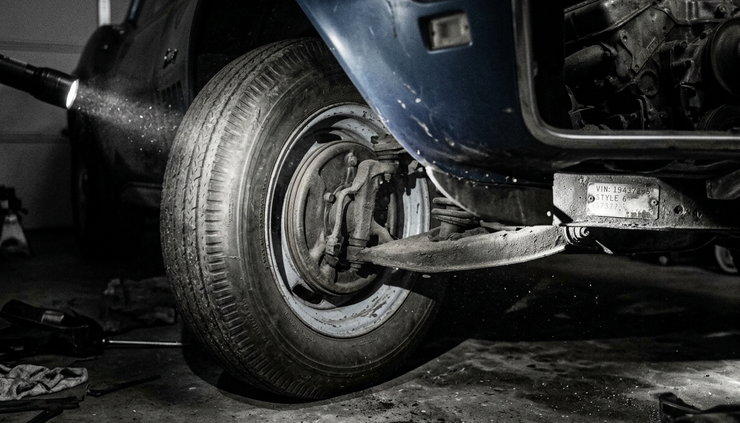
A TV version can turn that into a night drive, a storage yard, a torch beam across polished paint, and a number hidden near the chassis. The real version is slower. It means forms, requests, refusals, old records, and the patience to keep asking.

Signature questions sat at the centre of the case
Fraud often turns on a signature. One name in the wrong place can create a debt, transfer an asset, approve finance, or make a lie look official.
When I put the documents together and delivered them to Bruce Harwood, I also brought in a lawyer to oversee the process and look at signature verification. That was not theatre. It was necessary.
Signature verification is not just someone saying, “That looks wrong.” A proper review looks at patterns:
Letter shape
Pressure
Speed
Pen lifts
Slant
Spacing
Natural variation
Signs of tracing or hesitation
Known genuine signatures need to be compared with disputed ones. The age and source of the documents matters too. A photocopy is weaker than an original. A scanned page can hide pressure marks. A cropped signature block can remove context.
For a courtroom, clean evidence handling matters as much as suspicion. If documents pass through too many hands without a record, the other side can attack the chain of custody. That does not mean the truth disappears. It means the truth gets harder to prove.
This is one of the reasons the story became suitable for a book and a screen adaptation. It is not only about whether fraud happened. It is about how ordinary people try to prove it while institutions move slowly or close ranks.
The alleged police pressure changed the temperature
The darkest part of the account was not the house or the cars. It was what Debra’s children allegedly experienced.
According to the account, while still in their teens, the children were hassled by police and told their mother needed to back off her investigation because it affected prominent people. They were also allegedly told that even her lawyer had been sacked and that the case was closed because of a conflict of interest.
Those claims need careful handling. They are serious. They should be tested against records, witnesses, dates, station logs, complaint histories, and any notes made at the time.
But if the account is true, it shows why the case cannot be treated as just a private finance dispute. When children are pressured over an adult investigation, the power imbalance is extreme. A family already under stress can be made to feel isolated, watched, and beaten before any hearing begins.
This is where the “conspiracy theorist” lens can be both useful and dangerous.
Useful, because it asks who benefits, who had access, who signed, who paid, who got protected, and who wanted the questions to stop.
Dangerous, because a theory can outrun the documents if it is not disciplined.
The better way is to think like an investigator with dirty boots. Assume nothing. Check everything. Follow the paper, the money, the signatures, the VINs, and the property transfers. If a claim cannot be proven yet, mark it as unproven. If it can be proven, lock it down.
Why this became a book and a TV story
People often ask why real fraud stories make strong television. The answer is simple. They show violence without a punch being thrown.
A fraudulent document can move a family out of a house. A false income letter can bury someone in debt. A forged signature can sell a car or create liability. A bad property settlement can make the victim pay the people who harmed them.
This story had a central figure under pressure, a rough investigator figure from outside the legal machine, vehicles with hidden histories, friends who may not have acted like friends, and the shadow of prominent people in the background.
That is drama. But it is also evidence of why the real case still matters.
For the adaptation, some names and identifying details should be changed or combined. That protects people, reduces legal risk, and keeps the focus on the truth of the experience rather than turning the work into a list of accusations. The emotional truth can remain:
A woman trying to hold a home together
Children caught in adult intimidation
A tradesman investigator following instinct and documents
A system that moves faster to close files than answer questions
Two Corvettes that may still hold part of the trail
The best version of the story is not revenge fantasy. It is persistence.

The investigation is delayed, not finished
Files can be closed for many reasons. Conflict of interest. Lack of resources. Missing originals. Institutional discomfort. Poor advice. Time. Fear.
Closure on paper is not the same as justice.
If this case is ever reopened, the strongest path would be a clean reconstruction. Not noise. Not rumour. A timeline.
Start with the house. Then the loan. Then the income guarantee. Then the caveats. Then the sale. Then the payments. Then the Corvettes. Then the finance liability. Then the signatures. Then the alleged police contact with the children.
Each event should be matched with:
Evidence needed | Why it matters |
Loan application and supporting income documents | Shows what the lender relied on |
Accounting letter or guarantee | Tests the $1,800 a week claim |
Caveat records | Shows who lodged claims and on what basis |
Conveyancing file notes | Shows advice given during the sale |
Settlement payment records | Shows who was paid from the sale |
Vehicle finance and sale records | Shows liability and ownership movement |
VIN records | Helps track the Corvettes through legal channels |
Signature comparison material | Tests whether key documents were forged |
Police complaint or contact records | Tests claims of pressure on the children |
That is the work. Unromantic, slow, and necessary.
A good investigator does not need to shout. The documents either line up or they do not. The signatures either match or they do not. The VINs either lead somewhere or they do not. The money either went where it should have gone, or it did not.
Justice has been delayed because the trail was tangled, the pressure was heavy, and too many questions were treated as inconvenience. But delay is not defeat.
The next step is to preserve the file, protect the people involved, and put every claim into a form that can survive scrutiny. That is how a story becomes more than a story. That is how a screen adaptation keeps faith with the real people behind it.
The house sale, the hidden VINs, the signatures, and the warnings all point to one truth: this investigation did not stop. It is waiting for the right hands, the right forum, and the courage to follow the evidence to the end.
Comments